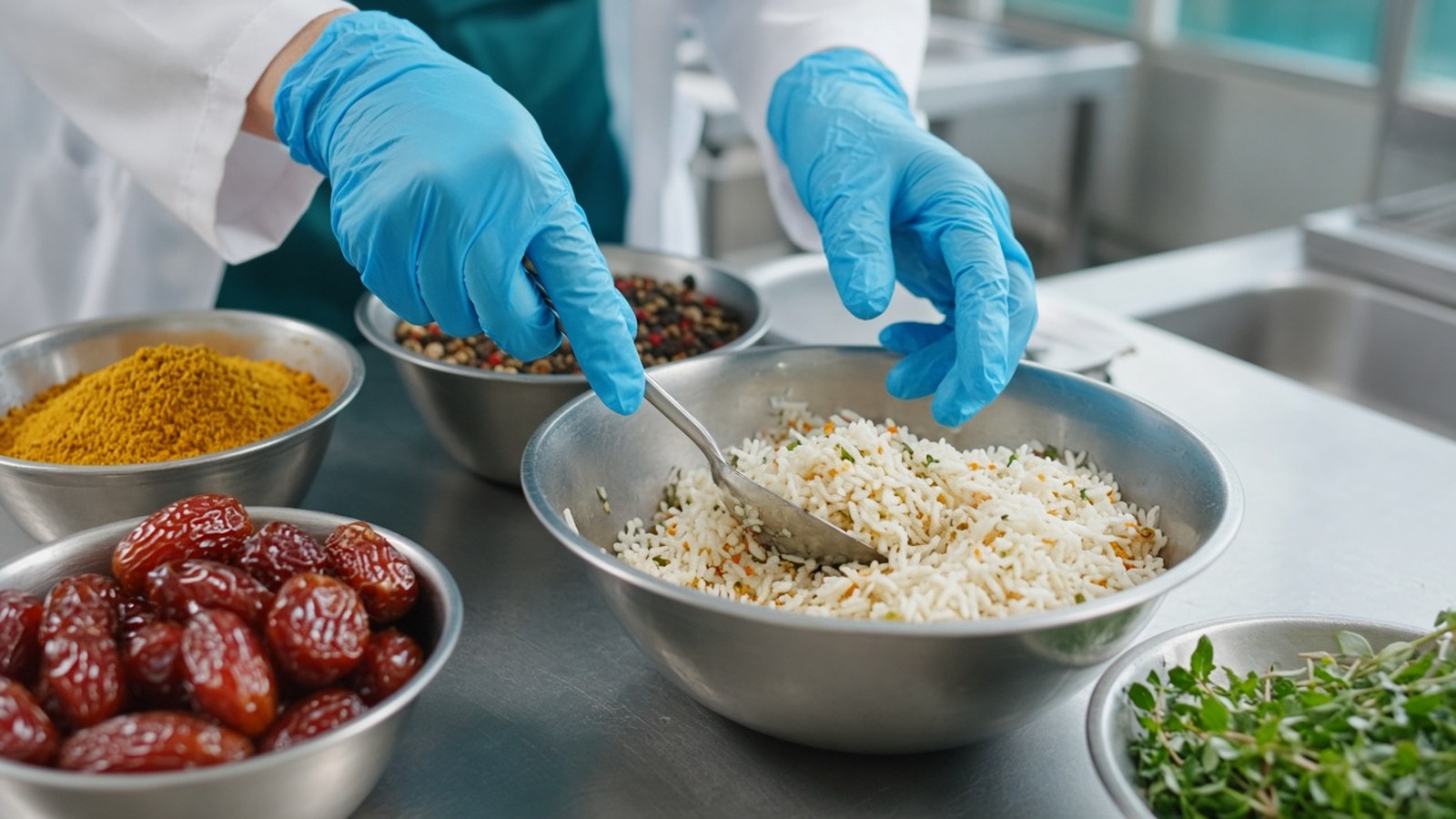
Halal food manufacturing is the production of food that meets halal requirements across ingredients, processes and facilities. Malaysia is known for its halal ecosystem, and for many brands halal is not optional. Working with a manufacturer that plans for it from the start can save time and avoid reformulation.
Key takeaways
- Halal covers the whole chain, not one ingredient.
- Tell your manufacturer early that halal is required.
- Halal sits alongside food safety frameworks such as HACCP and FSSC 22000.
- OEM and ODM both work for halal food.
Why is halal more than one ingredient?
A halal product depends on the whole chain: ingredients, suppliers, processing aids, production lines, cleaning, storage and labelling. A single non-compliant input can affect the result.
It is best to design the formulation around halal requirements instead of checking at the end. Malaysia’s halal certification framework is administered by JAKIM, and brand owners should check current requirements for their product.
What should you tell your manufacturer?
- That halal is required, and for which markets.
- Any ingredients you already plan to use, so they can be checked early.
- Your packaging and labelling plans.
How does halal fit with food safety?
Halal sits next to food safety. Frameworks such as HACCP and FSSC 22000 govern how food is produced safely. Food Halal certification addresses halal requirements. Furley works with Food Halal, FSSC 22000 and HACCP. You can see the full list on our certifications page.
Can you use OEM or ODM for halal food?
Yes. If you already have a recipe, OEM manufacturing produces it to specification, after the ingredients have been reviewed for halal compliance. If you have only an idea, ODM lets the manufacturer develop the product for you with halal built in. Read how the OEM and ODM process runs.
Are there other regulatory points in Malaysia?
Depending on the product, you may also deal with the Ministry of Health or the National Pharmaceutical Regulatory Agency (NPRA), particularly for products that make health claims. Review claims and label text early.
What mistakes should brand owners avoid with halal food?
The most common mistake is to treat halal as a final check. By then the recipe, the suppliers and the packaging may already be fixed, and changes cost time.
Another is assuming that an ingredient is acceptable because it is common. Ask for supplier documentation early and keep it with your product file. Good records make audits, retailer reviews and future repeat orders much easier to manage.
What should you do next?
Explore our manufacturing services or tell us about your product.
Halal manufacturing questions
Does halal apply to ingredients only?
No. It covers ingredients, suppliers, processes, facilities and labelling.
Should I tell the manufacturer that I need halal?
Yes, at the first conversation, so the formulation can be built correctly.
Can I develop a new halal food product from an idea?
Yes. Under ODM the manufacturer develops it from your brief with halal requirements built in.
Ready to start your own product?
Send us a short brief and we will reply with questions, options and next steps.
Call +603-8724-3280 | Email [email protected]